Buying guideBird Feeders
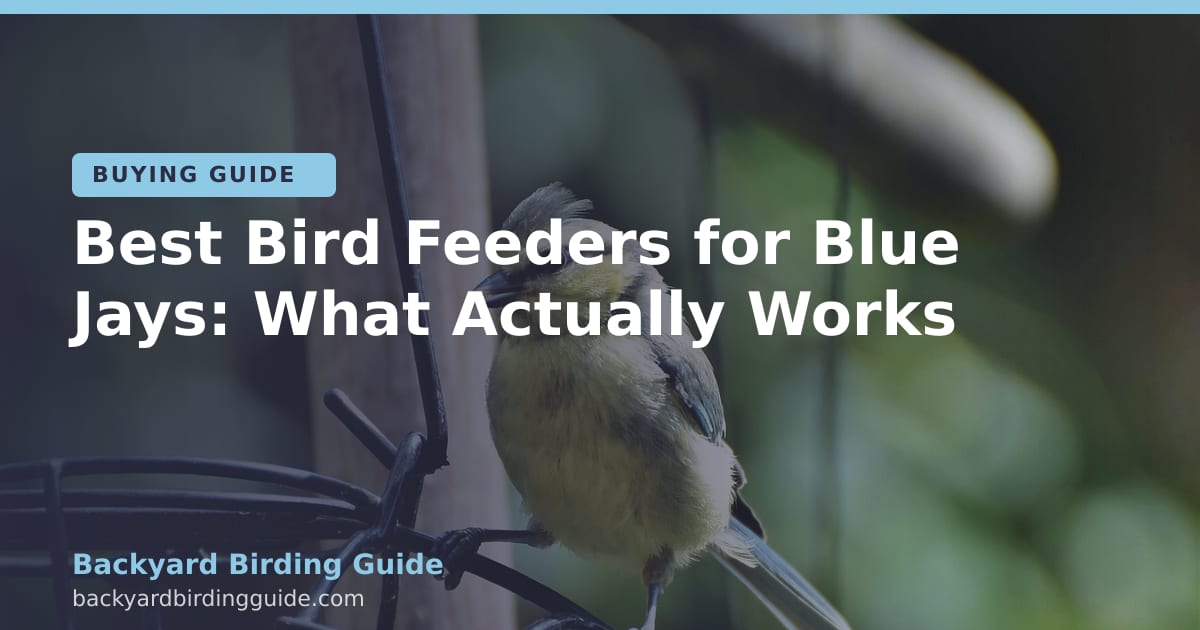
Best Bird Feeders for Blue Jays: What Actually Works
Disclosure: As an Amazon Associate I earn from qualifying purchases. Learn more
By Backyard Birding Guide Team7 min read
In this guide
- At a Glance
- The Short Answer: Start With a Sturdy Platform or Peanut Feeder
- What Actually Matters When Choosing a Feeder for Blue Jays
- The Main Feeder Types and How Jays Use Each
- Best Blue Jay Feeders by Use Case
- Common Mistakes That Keep Blue Jays Away
- Setting Up Your Feeder So Jays Keep Coming Back
- Related Guides
- Frequently Asked Questions
- Bottom Line
The best bird feeders for blue jays are sturdy and open, with room to land. A large platform feeder with whole peanuts and shelled sunflower or corn is the safest first buy. Here's how to match a feeder to your yard, budget and patience for mess.
At a Glance
- Pick a wide platform or open tray first. A dedicated peanut feeder is the next best choice.
- Jays prefer unsalted in-shell peanuts and black oil sunflower seed.
- Look for thick construction, drainage or a rain cover, and a tray that's easy to clean.
- Small tube feeders and flimsy perches rarely work for jays.
- No feeder guarantees jays. Food, placement and your local range matter just as much.
The Short Answer: Start With a Sturdy Platform or Peanut Feeder
Blue jays are big birds, so they need room to land and a perch that won't tip or swing under their weight. For most yards, a large platform feeder is the most reliable first choice. Fill it with whole peanuts in the shell plus shelled sunflower or corn.
If you mainly want jays and less spilled food, a dedicated peanut feeder is the best second option. Be realistic, though. Hardware alone won't bring jays in. If they aren't in your area, or the food and placement are wrong, even a great feeder will sit quiet.
What Actually Matters When Choosing a Feeder for Blue Jays
- Perch and landing space. Jays often land on the edge or front before eating. A wide tray or open platform beats a narrow tube. If the feeder has ports, they should be at least 1.5 inches across.
- Build strength. Choose thick, solid construction and secure hardware. Jays have heavy bills and can knock lightweight feeders around. Metal and cedar tend to outlast thin plastic.
- Capacity. Jays empty feeders fast. More capacity means fewer refills.
- Weather protection. A rain cover or drainage holes keeps peanuts and seed from molding. Moldy food can be unsafe for birds.
- Mounting. Use a pole or hanger that holds weight steadily. Put it where you can see it from a window.
- Cleaning. A feeder you can empty and scrub easily beats a fancier one you'll never maintain.
The Main Feeder Types and How Jays Use Each
| Feeder type | How jays use it | Trade-off |
|---|---|---|
| Platform | Best all-rounder. Holds peanuts, corn and seed, and jays land freely. | Spills food and needs drainage. |
| Peanut-specific | Holds in-shell peanuts, which jays strongly prefer. Keeps food visible. | Narrower use than a platform. |
| Wreath or mesh | Works for whole peanuts. | The open ring can be awkward for a large bird to land on. |
| Hopper or tube | Jays can perch, but it's often inconvenient. | Better for small seed eaters, and jays may crowd them. |
| Suet | Jays may visit. | A supplement, not a reason to buy. |
Best Blue Jay Feeders by Use Case
Here are the picks, strongest overall first.
- Best overall: Kingsyard Large Platform Bird Feeder with Rain Cover (mid-range). Choose it if you want one open tray for mixed peanuts and seed that stays dry.
- Best for easy cleaning: Nature's Way CWF3 Cedar Platform Feeder (mid-range). Choose it if you want a wood-look tray that lifts out for scrubbing. Cedar will weather over time.
- Best for peanut-only feeding: DutchCrafters Poly Peanut Feeder (premium). Choose it if you want a long-lasting feeder that keeps whole peanuts in one place.
- Best budget peanut option: Songbird Essentials SE6020 Whole Peanut Wreath Feeder (budget). Choose it if you want a simple, cheap way to offer peanuts.
- Best budget for capacity: Meleave Metal Bird Feeder 6.5lb Large Capacity (budget). Choose it if you'll leave it out between fills and feed a crowd.
- Also worth a look: Absolute II (Woodlink) (mid-range). Choose it if you want a stable, high-capacity feeder with large perching areas and squirrel resistance. Check the listing for feeder type before buying.
The Kingsyard and Nature's Way are the closest pair. Pick Kingsyard for rain protection, or Nature's Way for faster cleaning.
The Kingsyard has a mesh-style base, so it's less suited to peanut-only feeding. If peanuts are your whole plan, the DutchCrafters fits better.
1. Absolute II
Best for: Families who want a sturdy, high-capacity feeder that resists squirrels
Suits families who want a stable, high-capacity feeder with a squirrel-resistant design and large perching areas for bigger birds. It costs more than basic tube feeders.
What we like:
- Stable design that does not swing much
- Holds plenty of seed for several birds
Keep in mind:
- Higher cost than basic tube feeders
2. Nature's Way CWF3 Cedar Platform Feeder
Best for: Yards that want an easy-to-clean open tray for peanuts and mixed food
Suits yards that want an open cedar tray for peanuts and mixed food. The removable tray cleans up quickly, and warranty length varies by seller.
What we like:
- Tray removes quickly for cleaning
- Open design gives jays room to land
Keep in mind:
- Reviewer data is limited, so long-term durability is unconfirmed
- Warranty length varies by seller
3. DutchCrafters Poly Peanut Feeder
Best for: Owners who want a long-lasting, premium feeder for in-shell peanuts
Suits owners who want a long-lasting, Amish-made poly feeder for in-shell peanuts. It costs more than basic mesh feeders and holds about 3 pounds.
What we like:
- Reviewers report no fading, cracks or rust after long use
- Large perch and easy-open roof suit big birds
Keep in mind:
- Higher price than basic mesh feeders
- Smaller capacity than hopper models
4. Songbird Essentials SE6020 Whole Peanut Wreath Feeder
Best for: Budget-minded yards that want a simple peanut feeder for jays
Suits budget-minded yards that want a simple peanut feeder that hangs easily. It holds up to 4 pounds, but squirrels can also reach the peanuts.
What we like:
- Simple design that is easy to hang
- Low price point for a peanut feeder
Keep in mind:
- Smaller capacity than hopper or platform feeders
- Squirrels can also reach the peanuts
5. Kingsyard Large Platform Bird Feeder with Rain Cover
Best for: Yards that want a weatherproof open tray that keeps seed dry
Suits yards that want a weatherproof open tray with a rain cover to keep seed dry. The mesh-style base is less suited to peanut-only feeding.
What we like:
- Rain cover protects food from wet weather
- Open tray suits mixed seed and peanuts
Keep in mind:
- Mesh-style base is less suited to peanut-only feeding
6. Meleave Metal Bird Feeder 6.5lb Large Capacity
Best for: Budget buyers who want maximum seed capacity for a crowd of jays
Suits budget buyers who want about 6.5 pounds of capacity in an all-metal build. Drainage is poor, so seed can stay wet, and rain protection is limited.
What we like:
- Large capacity for the price
- Metal build is durable
Keep in mind:
- Poor drainage can leave seed wet
- Spring mechanism can fail; rain protection is limited
Skip it if...
- Kingsyard: you only want to offer peanuts.
- Nature's Way: you need long-term durability proven by many reviews. Reviewer data is limited.
- DutchCrafters: you want a big capacity or a low price.
- Songbird Essentials: squirrels are a problem, or your jays struggle with an open wreath.
- Meleave: your spot gets lots of rain. Drainage is poor and rain protection is limited.
- Absolute II: you want the cheapest option. It costs more than basic tube feeders.
Common Mistakes That Keep Blue Jays Away
- Using a small tube feeder and expecting jays to use it comfortably.
- Filling it with cheap mixes heavy in fillers jays ignore, then blaming the feeder.
- Letting peanuts or seed get wet and moldy.
- Placing the feeder far from cover, so birds feel exposed.
- Overfilling a platform until food piles up, spoils or draws unwanted visitors.
- Expecting instant results. Jays can take a few days to find a new source, and they return only if food stays available.
Setting Up Your Feeder So Jays Keep Coming Back
- Place it well. Mount it within view of a window, with a tree or shrub nearby for perching and retreat.
- Offer the right food. Put out unsalted whole peanuts in the shell alongside shelled sunflower or corn.
- Refill steadily. Keep a regular schedule and remove old, damp food promptly.
- Clean it. Wash the feeder periodically using a method suited to its material, so the food area stays sanitary.
Tip: Start with a small handful of peanuts on the tray's edge. It's easier to see what disappears, and you'll avoid piles of spoiled food.
Related Guides
- Best Squirrel-Proof Bird Feeders for Backyard Birds
- Best Hummingbird Feeders to Attract Hummingbirds in Your Yard
- Best Hummingbird Feeders to Keep Bees Away (Honest Picks)
Frequently Asked Questions
What is the best feeder for blue jays?
A large platform feeder is the best all-round choice. It gives jays room to land and holds peanuts, corn and seed. If you want mainly jays and less mess, a dedicated peanut feeder is a good alternative.
Do blue jays eat peanuts in the shell?
Yes, and they strongly prefer them. Choose unsalted in-shell peanuts. They also eat black oil sunflower seed and corn.
Why aren't blue jays visiting my bird feeder?
It may be too small, too far from cover, or filled with a mix jays ignore. Jays can also take a few days to notice a new feeder. Your local range matters too.
Do blue jays chase other birds away from feeders?
They can dominate smaller feeders and crowd out smaller birds. An open platform gives everyone more room. Offering a separate small-bird feeder helps too.
Is a platform feeder better than a tube feeder for blue jays?
Usually, yes. Platforms give jays space to land and handle bigger foods. Tube feeders suit small seed-eating birds better.
How often should I refill a feeder for blue jays?
Jays empty feeders quickly, so check often and refill on a steady schedule. Add only what they'll eat soon. Remove damp or old food before topping up.
Bottom Line
For most yards, buy a sturdy platform feeder and fill it with in-shell peanuts. Choose a peanut feeder if you want less spillage. Keep it dry, clean it, and give jays a few days to find it.